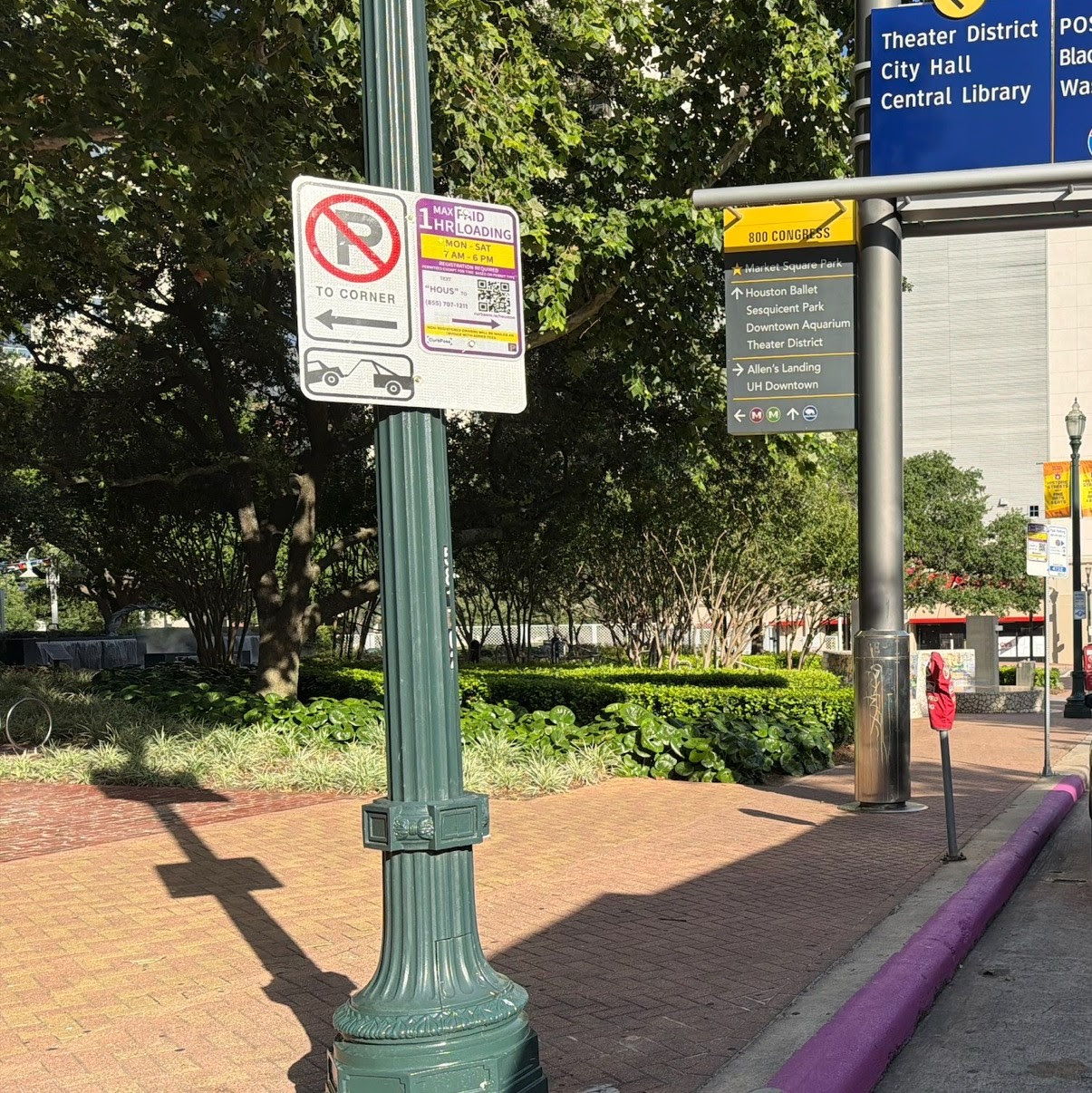
HOUSTON – Today, the City of Houston launched a Smart Loading Zone pilot program to improve curb access, reduce congestion, and support safer and more efficient loading and unloading activity in busy areas of the city.
The 18-month pilot program will introduce technology-enabled loading zones, powered by Automotus, in Downtown and Midtown Houston, designed for commercial loading and unloading. The program is part of the City of Houston’s ongoing efforts to modernize curb management and improve access to limited curb space.
Smart Loading Zones use sensor-based camera technology and license plate recognition (LPR) to identify vehicles using designated loading areas. The curb for these zones will be painted purple to indicate a special zone, and these zones will operate Monday – Saturday, 7 a.m. to 6 p.m. Drivers will not need to use a pay station, permit, or mobile app, but instead can register their vehicles and set up an account, and the LPR will bill the account directly. The system also provides data that will help the City better understand curb usage and improve traffic flow and loading operations.
The pilot is intended to:
Improve turnover in loading zones so more vehicles can access curb space
Reduce congestion and double parking in busy corridors
Support businesses and commercial deliveries
Use technology and data to improve curb management operations
Simplify the parking process for drivers
“Houston’s curb space serves many different needs, including deliveries, rideshare activity, pedestrians, and traffic movement,” said Administration & Regulatory Affairs Director Tina Paez. “This pilot will use technology to improve curb access, reduce congestion, support public safety initiatives, and improve efficiency.”
Drivers can register their vehicle online at https://www.curbpass.io/houston. Time spent in a Smart Loading Zone will automatically be charged to the payment method identified in the driver’s account. The pilot program begins today, June 2, 2026, and the City of Houston will work with businesses, drivers, and community stakeholders throughout the pilot to evaluate the program and identify future improvements.